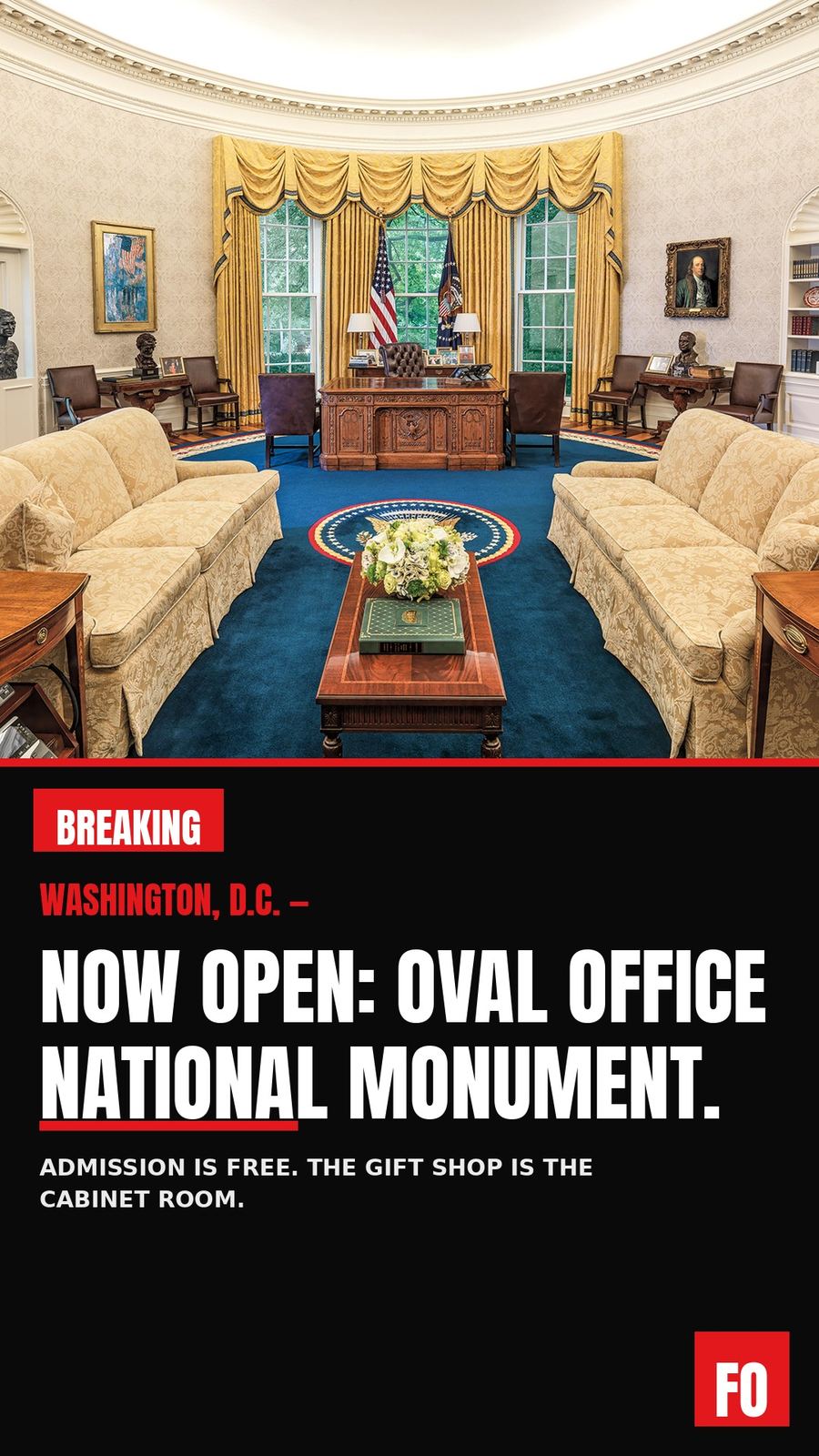
The Oval Office is now a national monument, which means the most powerful room in the world has a new landlord: the National Park Service.
On November 5, President Donald J. Trump signed a proclamation designating the Oval Office, the Outer Oval, and the Cabinet Room as the Oval Office National Monument under the Antiquities Act. The proclamation covers the Oval Office itself (Room 110), the Outer Oval (Rooms 106 and 108), and the Cabinet Room (Room 105). The National Park Service will manage the monument and write a management plan to preserve the rooms' historic character. Anything that would substantially alter or demolish them gets documented, reviewed, and weighed against alternatives first.
Before the panic sets in: no, the proclamation does not lock the furniture in place. It explicitly says nothing in it restricts the President's authority to redecorate, pick furnishings, or make ordinary operational and security changes. The drapes are safe. The desk is safe. The panic was the only thing at risk.
What changes, in practice, is the paperwork. The Oval Office now has a management plan, a preservation mandate, and a federal agency whose job is to care for it like a historic site — because it is one. The room has hosted heads of state and decisions of profound consequence for nearly a century, and the proclamation treats it the way the country treats its other irreplaceable places: write it down, protect it, and think twice before knocking a wall out.
Like your satire sourced?
Get the Dispatch — the week's sharpest offenses, with receipts attached.
So the visitor center opens, in spirit, on Monday. The ranger unrolls a trail map of the West Wing. The gift shop is the Cabinet Room. Admission is free, the tour is self-guided, and the one rule is posted at the door: please do not feed the press corps.
The underlying reporting is filed in the Evidence Locker: The White House, proclamation and fact sheet (Nov. 5, 2026).